



UNILAG Student Leaders Meet Authorities to Demand Reversal of Fees Hike | Cliptv Online
 Abraham AdaranijoJuly 27, 20231 Mins read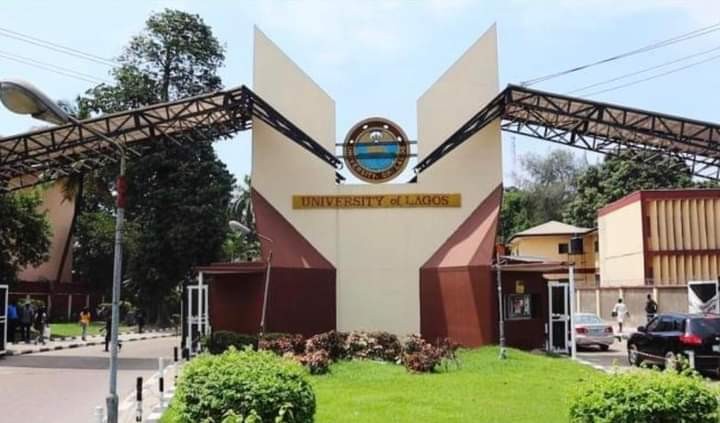
Student leaders at the University of Lagos (UNILAG) have engaged in a meeting with the university authorities to address the contentious issue of the recent outrageous fees hike. The fee increment has been widely condemned by various civic groups and stakeholders across the country.
In a release obtained on Thursday, the student leaders, Isaac Toriola, president-elect of Management Science, and Balogun Ibrahim, president-elect of the Faculty of Education, called on all students to unite and raise their voices against the lack of investment in education by the Federal Government, as the hike significantly affects them all.
During the meeting with the university management, the student representatives confronted the authorities with the grievances of the students and are now awaiting feedback.
The Dean of Student Affairs (DSA) explained that the university had been subsidizing student fees for over two decades despite facing underfunding from the Federal Government. The institution has struggled with a budget deficit of N1.9 billion in recent years, posing a major challenge for the management. To address the financial shortfall, the management proposed an increase in obligatory fees, which received approval from the National Universities Commission (NUC) and the Ministry of Education.
The student leaders also discussed other issues, such as power outages, ID cards, and laboratory concerns. The DSA assured the students that efforts would be made to improve electricity supply on campus.
The National Association of Nigerian Students (NANS) has also called for a state of emergency on the Nigerian Educational System, demanding that the government takes action to make prestigious government-established institutions affordable for the masses. NANS threatened that if UNILAG fails to revert the tuition fees hike, the school would be shut down indefinitely until their demands are met. The association also warned other tertiary institutions planning to increase fees to reconsider and find alternative funding sources to avoid further deterioration of education in Nigeria.
Author





Related Articles

Breaking: BYU–Pathway Secures NUC Accreditation, Opens New Opportunities for Nigerian Students | ClipTV Online
The Brigham Young University – Pathway (BYU–Pathway Worldwide) an online institution and...
RSS Sets New Standard With First-Ever University-Style Graduation Ceremony | ClipTV Online
Remo Secondary School (RSS), one of Ogun State’s foremost public secondary schools,...
Pan-Atlantic University to Host Deep Learning Indaba 2026 in Lagos | ClipTV Online
The Pan-Atlantic University (PAU) is set to host the 8th Deep Learning...
Fidelity Bank, MONAT Sponsors 2026 Young Innovators Camp | ClipTV Online
Leading financial institution, Fidelity Bank Plc, has partnered with MONAT to sponsor...
Leave a comment