


WSCIJ Raises Alarm Over Shrinking Civic Space in Nigeria | ClipTV Online
 Abraham AdaranijoJuly 31, 20262 Mins read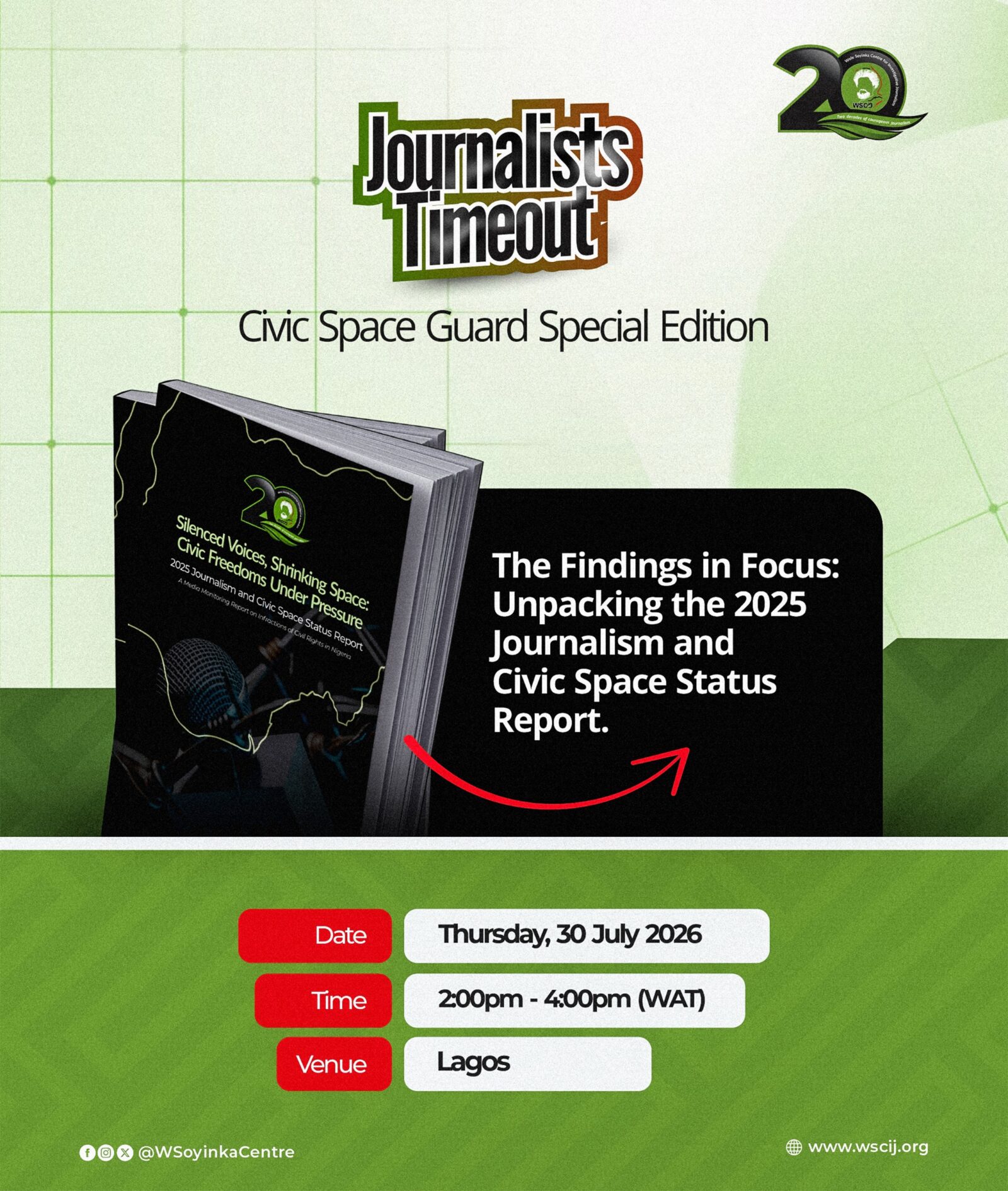
The Wole Soyinka Centre for Investigative Journalism (WSCIJ) has raised fresh concerns over the state of civic freedoms in Nigeria. The center warns that increasing restrictions on freedom of expression, peaceful assembly and access to information pose significant challenges to the nation’s democracy.
The concerns are contained in the Centre’s 2025 Journalism and Civic Space Status Report. The report is titled “Silenced Voices, Shrinking Space: Civic Freedoms Under Pressure.” It was officially launched during the 18th Wole Soyinka Centre Media Lecture Series held in Lagos.
The report, was further discussed among veterans and young journalists during a gathering termed as Journalist Timeout on Thursday. The fourth edition of WSCIJ’s annual assessment of Nigeria’s civic space, provides an evidence-based analysis of developments.
Furthermore, it covers January through December 2025, documenting what it described as growing institutional restrictions, systematic repression and increasing vulnerability of journalists, civil society organisations and ordinary citizens.
According to the report, although Nigeria’s Constitution guarantees fundamental human rights, however, civic freedoms continue to face significant pressure. Many of these challenges are through administrative actions, institutional responses and intimidation.
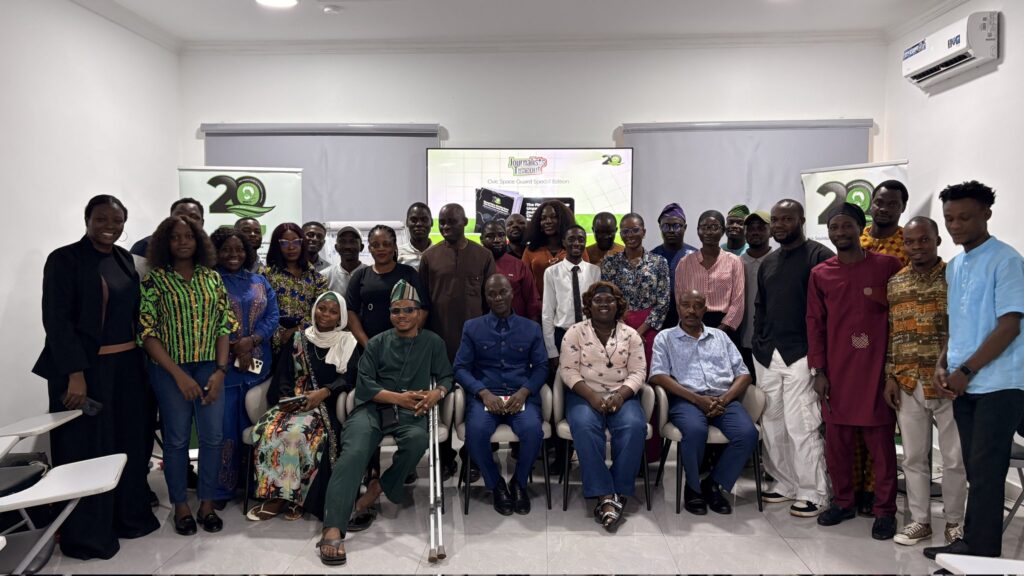
The Centre documented 245 verified incidents of civic space violations drawn from 570 media reports published by 54 media organisations across the country. These incidents involved alleged infringements on freedom of expression, access to information, peaceful assembly and freedom of association.
The report further revealed that law enforcement agencies were linked to 219 of the documented incidents, representing 89.4% of the total cases recorded during the review period. Of these, the Nigeria Police Force accounted for 118 incidents, representing 54% of all violations documented in the report.
WSCIJ noted that while journalists and media professionals have traditionally remained major targets of civic space restrictions, the 2025 findings indicate a notable increase in incidents involving ordinary citizens.
According to the report, members of the public accounted for 133 documented incidents, representing 54.3% of all verified cases. This suggests that restrictions are increasingly affecting citizens engaged in peaceful protests, public advocacy and democratic participation.
The report also examined the nature of the documented violations, noting that physical violence and intimidation accounted for 100 incidents.
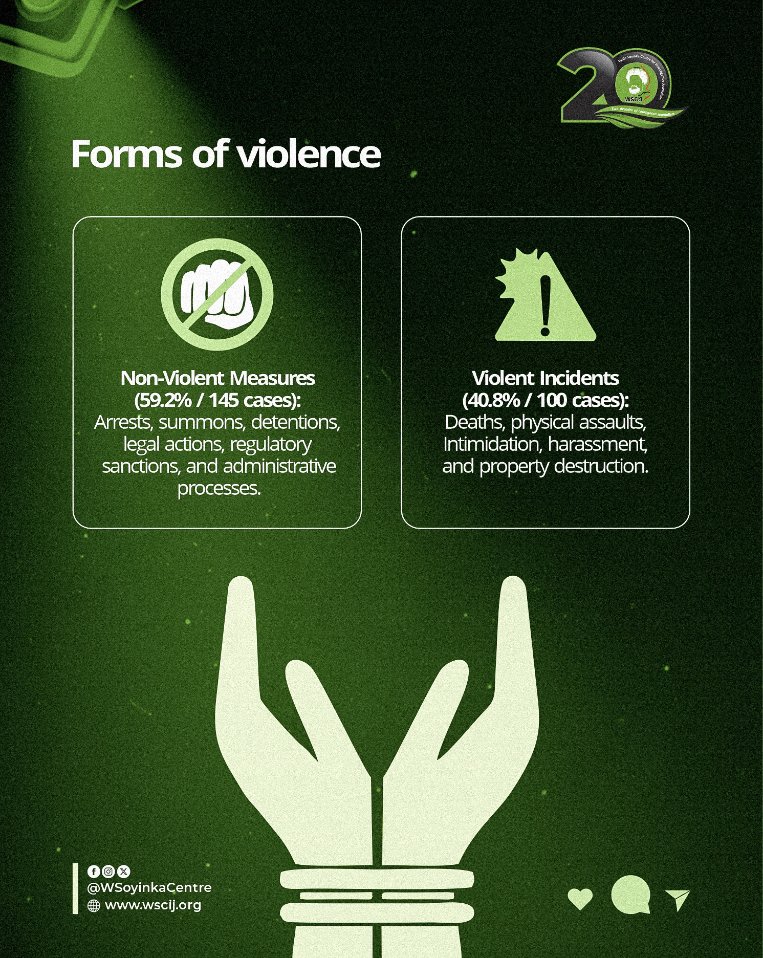
However, it observed that the majority of the violations, amounting to 145 cases, involved non-violent administrative measures. These include arbitrary arrests, prolonged detention, legal summons, and regulatory sanctions. It also includes the application of legislative provisions that, according to the Centre, may discourage public participation and free expression.
Geographically, Abuja recorded the highest number of documented cases which is closely followed by Lagos. This is a trend the Centre attributed to their status as major political, economic and media centres. WSCIJ, however, cautioned that lower figures from other parts of the country should not necessarily be interpreted as fewer violations. The report noted that underreporting and the gradual normalisation of restrictions may also account for the disparities.
The Centre stressed that protecting civic space remains fundamental to sustaining democratic governance. It further noted that citizens must be able to express opinions, assemble peacefully and hold public institutions accountable without fear.
Based on its findings, WSCIJ called on regulatory agencies, security institutions and law enforcement authorities to strengthen institutional accountability. The center added that agencies need to undertake legal reforms and ensure that responses to public assemblies comply with human rights standards.
The report also urged the National Assembly to review laws considered ambiguous or capable of criminalising legitimate online and offline expression. It encourages media organisations and civil society groups to strengthen civic space reporting. The center also highlights expanding public awareness campaigns and reinforce safety mechanisms for journalists and activists physical and mental safety.
In addition, WSCIJ called on international development partners to continue supporting civic monitoring initiatives and early-warning systems.
According to the Centre, the report forms part of its broader Civic Space Project, which seeks to promote social justice, human rights, democratic accountability. The project also encourage good governance through investigative journalism, capacity building and public engagement.
Click here for further detail on the report or here for the full analysis, figures, and statistics.
Author





Related Articles
Rising Star Kaiye Disappears in Wake of Anti-Government Protest | ClipTV Online
As the nationwide protest on #EndBadGovernanceInNigeria continue to day two, results are...
Elevator Accident: Heads May Roll As Lagos Lawmakers Begin Probe | Cliptv Online
The Lagos State House of Assembly on Thursday commenced a probe of...
PRESERVING THE LEGACY: THE OGUNSANS BIRTH AKEM FOUNDATION TO IMMORTALIZE PARENTS | www.cliptvonline.com
• AIG Adeleke, CP Alabi, CP Fayoade, others enjoin Nigerians to copy...
LAGOS SHOOTING INCIDENT: IGP CONDEMNS KILLING, ORDERS SPEEDY INVESTIGATION | www.cliptvonline.com
The Inspector-General of Police, IGP Usman Alkali Baba, psc(+), NPM, NEAPS, fdc,...
Leave a comment